












 Loading...

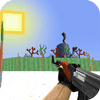
There is a certain electric thrill that courses through a player's veins, suspended in mid-air, the ground a distant mosaic of pixelated grass far below. It’s the thrill of the perfect jump, the split second decision that ends in a graceful landing on a narrow ledge from a plummeting, ragdoll descent into the void. The world of parkour games is one of adrenaline, precision and obsession. It’s about taking the act of moving from one place to another and turning it into an art form involving timing, spatial awareness and creative expression. But in this vibrant, demanding genre, one game stands out with its lovable esthetic, its deceptively deep mechanics, and its sprawling, imaginative worlds that should be explored from every angle. Another free-to-play adventure on GamePix, Blockworld Parkour, drops you into a colorful, blocky universe and dares you to find your own way through the sky.
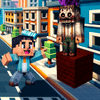
First impressions of Blockworld Parkour are like jumping headfirst into a living, breathing toy box. The world is built with the familiar, beloved vocabulary of voxels, chunky, geometric building blocks that evoke a childlike sense of creativity and limitless possibility. But this is not a quiet building sandbox. This is a dizzying, obstacle-filled playground where every rooftop, every floating platform and every precarious scaffolding is a test of your mastery of the game's movement mechanics. You are a blocky traceur, a pixelated parkour runner, and your mission is to get through vast vertical obstacle courses, running, jumping, climbing and vaulting your way to the finish line. There are no enemies to fight, no complicated inventories to manage. It’s just you, the architecture and the hard, beautiful challenge of moving through space with grace and precision. This guide is your complete training manual. It’s designed to help you understand not just the controls, but the physics, the advanced methods, the mental discipline, and the pure, flowing joy of mastering a perfect parkour line through the blocky sky.
Movement Language – Learning the Physics of the Game
Before you can fly through the air with the balletic grace of a master traceur you have to make a humble and thorough peace with the fundamental laws of physics that govern the Blockworld Parkour universe. Each game in this genre has its own unique "feel." There's a definite weight, momentum, and arc to the jumps that sets the whole experience. Blockworld Parkour isn't a floaty, forgiving platformer where you can casually adjust your trajectory mid-flight. It works on the principle of committed parabolic motion. When you press the jump button you are making a declaration. The length of your button press determines the specific, predictable arc your character launches into the air in, based on your speed and angle of approach. Your trajectory is pretty much locked in once your blocky feet leave the solid ground. You can do tiny little nudges with your directional controls but you can't magically reverse your momentum or do a major course correction in mid-air.
This principle of commitment is the first and most important lesson for any aspiring parkour master. The beginner player plays the game as one would expect of a standard first-person platformer: making hopeful and random leaps, and expecting to be able to guide themselves to safety. They leap at the very last second, eyes on the edge of the platform they are leaving, and are constantly baffled when they sail past their intended landing zone or fall short into the abyss. The master player knows every jump is a calculation. They are unconsciously and constantly calculating three vitally important factors: how fast they are approaching, exactly where they will take off, and how far and how high their intended landing spot is. The horizontal distance of a running jump from a full sprint is much greater than that of a standing jump from a standstill, but you need a flat, clear runway to get that all important momentum. A standing jump will give you less range but more precision and control. The master player doesn’t simply jump. They orchestrate their jumps. Through hours of practiced, intuitive feel they know exactly how much runway they need for a specific gap, and they start their jump not at the edge of the platform, but several steps back, gathering the necessary velocity to carry them cleanly and safely across.
This deep, intuitive grasp of momentum also informs the art of the landing. A common, deadly mistake for beginners is to land on a small platform while still holding the forward movement key, which sends your character taking one or two accidental, momentum-driven steps right off the opposite edge and into the void. The landing is not the end of the jump, but the crucial and fragile transition into the next sequence. The master player has mastered the controlled landing. They instinctively tap the backward movement key or stop all directional input the moment they touch down to immediately stop their forward momentum and get themselves stabilized. This is the fine-motor literacy of parkour, the ability to transition from high-speed, airborne flight to perfect, poised stillness on a platform no larger than a dinner plate, ready to assess the next obstacle and start the cycle again.
The Enhanced Lexicon: Mastering Higher-Level Techniques
After you’ve figured out programming the basic jump into your muscle memory, the real depth of Blockworld Parkour starts to shine through with its expanded vocabulary of movement techniques. These are not just flashy tricks, they are vital instruments that open new paths, overcome seemingly impossible obstacles, and shave precious seconds off your time. The first and most universally important of these is the wall-run, or wall-jump. You will often see sheer vertical surfaces, tall faces of buildings with no obvious platforms, or gaps too wide to cross in a normal way. The unskilled player perceives a wall as a barrier that can't be crossed, the end of the road. To an expert parkour artist a wall is a springboard, a vertical surface filled with potential energy. If you jump at a wall at an angle and press jump again as you hit it, your character will kick off the wall, gaining extra height and reversing direction or changing direction. Timing is important on this wall-kick. Do it too early and you won’t get contact. Wait too long and you’ll just slip down the wall and fall. The aim is to find the rhythm of the ricochet, by a sequence of opposing walls to climb vertically like a pinball going up a shaft, a technique often called "wall-jumping" or "tic-tacing".
Another important technique that separates the casual player from the dedicated speedrunner is the art of the ledge grab and mantle. Your jump will often be just a fraction too short. Your blocky fingers will grab the very edge of the target platform, leaving your character precariously hanging. This is not a mistake; it is a second chance. The new player, in a panic, tends to let go of the controls or press random buttons, and falls off the ledge to their doom. The master player answers with cool, practiced precision. They hold down the climb or jump button to pull themselves up and over the ledge in a flowing mantle. But the intentional short jump is the sophisticated application of this technique. Landing perfectly on a tiny platform is a high-risk proposition, but the master player might try to grab the ledge instead, deliberately undershooting the jump ever so slightly. A ledge grab is a safe, controlled and reliable state. Once they are safely hanging on the ledge, they can then mantle onto the platform in a calm and safe manner, with no chance of overshooting. This is a compromise of speed for absolute security, a calculated move, the mark of the mature, strategic parkour mind.
Another useful technique for negotiating low ceilings and tight spaces is the slide or crouch-jump. You will run into tunnels, ventilation shafts and narrow ledges where a normal standing or running jump will have your character’s head hitting the ceiling, breaking your momentum and dropping you into the void below. Jumping out of a slide or crouch position causes your character's hitbox to collapse, enabling you to travel a fair distance while staying low to the ground and sliding under low obstacles gracefully. Finally, the most challenging but also the most rewarding technique is the momentum chain, the ability to string together a series of wall runs, jumps and vaults without a single pause or stutter. This is the parkour line, the flowing, unbroken sentence of motion that changes the game from a series of separate obstacle negotiations into one long, continuous, breathtaking, kinetic poem. Perfect momentum chains require a detailed understanding of the map geometry, a pre-planned path, and the flawless rhythmic execution of every input. When you hit it, time seems to slow, your fingers dance over the controls with an autonomous wisdom, and your character flows through the environment like water finding the path of least resistance. This is the flow state of Blockworld Parkour, the ultimate reward for all your practice.
The Observer’s Gaze Route Planning and the Art of the Scan
A new traceur will respond to what’s right in front of them to do a course. They get over one hurdle, land, look quickly round for the next platform, then make a hurried and often ill-judged spring. It’s like reading a book, letter by letter. You will never get into flow state or have a decent completion time with this method. The master traceur is operating on a whole other perceptual level. They know parkour is not only about the physical, but also the visual and analytical. They have already read the whole sequence, planned their route and visualized their movements before they commit to a single jump.
It starts with the art of the scan. Your first move when entering a new area or reaching a difficult section is not to go forward. Should be to quit. If you can, find a safe spot from a height. Let your eyes move across the surroundings, not with a wild, darting, searching glance, but with a calm, deliberate, analytical survey. You are looking for the line, the best, unimpeded path from where you are to where you want to be. Look for visual clues the level designer has left you: a slightly discolored wall panel that suggests a runnable surface, a series of platforms that make a subtle ascending curve, a distant scaffolding that perfectly matches your current rooftop. The game is a language of environmental clues, and you’ve got to learn to read it fluently. This is the pivot from a reactive, panicked approach to a proactive, strategic one. You’re not just playing the level anymore. You’re studying it, deconstructing its geometry, planning an attack.
After deciding on the route of choice, the next cognitive step is visualization. Before you make the first jump of a complicated sequence, mentally rehearse the whole chain. Picture yourself doing the running jump, the mid-air turn, the wall-kick, the ledge grab and the final mantle. Feel the rhythm of the inputs under your fingers. This mental dress rehearsal primes the motor planning systems in your brain so the actual execution is much smoother and more reliable. Your body already knows what it has to do before you touch the first button. This is a method used by top athletes and performers and is a very effective way of getting through the most difficult and intimidating parkour sequences. Ten minutes of frantic failure is not worth a minute of relaxed scanning and visualizing. This is the cerebral, strategic heart of the discipline.
The Psychological Wall: Beating Tilt and Building Resilience
All the bright-and-bubbly fun and creativity of Blockworld Parkour can be a harsh teacher of emotional control. This genre is infamous for its "foddian" elements, a term coined by the notorious Getting Over It with Bennett Foddy, where a single, momentary lapse of concentration can undo minutes of meticulous, vertigo-inducing progress. You're gonna trip. You’ll fall from great heights. You’ll fall off the last platform of a vicious twenty minute section, fingertips just touching the finish line, and you’ll watch your blocky character tumble helplessly back down through layers of obstacles you had already cleared. This moment is a crucible. It will provoke a sharp, visceral, physiological rush of frustration, a tightness in the chest, a clenching of the jaw. This is the “tilt” moment, and how you deal with this defines your whole journey.
The unskilled and tilt-prone player immediately hits the restart button, or frantically begins scrambling back up from their crash site. Stress hormones wash over their brain, their fine motor control is impeded, and they make impulsive, reckless decisions. They run through the early parts that they had navigated so carefully and precisely before, making unforced, sloppy errors that send them sliding even further down the standings. The frustration is multiplied by itself and the session becomes a fiery vortex of rage and despair. The master player has a whole different ingrained protocol. The second a catastrophic fall happens, their hands are off the keyboard or screen. They stand on their heels. They breathe one slow, deep, deliberate, single breath. They notice the frustration that emerges in their mind, deliberately, without judgment, and they see it as a natural, physiological reaction. They let it go, like a cloud drifting across the sky. This little three second ritual is a huge psychological circuit breaker. It disrupts the tilt feedback loop before it can set in.
This practice is predicated on the deep acceptance of failure as a necessary and integral part of the learning process. Every autumn is a data point, a lesson in physics, timing or route choice. The fall from the last platform was a terrible one, but it taught you an important lesson: you were a little off on your approach to that particular jump, your timing was a millisecond early, or there was a fatal flaw in your route that you hadn't seen. You won’t make that mistake again.” The goal thus shifts subtly but powerfully. It's not simply about getting to the end anymore. It's about getting better at executing every single time. A run that results in a spectacular, frustrating failure is not a wasted run. It is a run that has provided you with valuable information, enhanced your mental strength, and made you a somewhat incrementally better player than you were before. With this attitude the game ceases to be an infuriating punishment machine and becomes a patient, rigorous and ultimately rewarding dojo for the cultivation of resilience, patience and unshakable emotional composure.
The Way to Flow: A Training Schedule that Works
To integrate all this knowledge into a practical path to mastery requires a structured approach. Don’t expect to be able to do perfect momentum chains right away. Take your journey in measured and focused steps.
Phase One: The Groundwork Drills
Your main goal is not to beat levels, but to create an unshakable, fundamental muscle memory for the basic physics. Find a safe, early part of the game with lots of simple obstacles and a low penalty for falling down. Consider the first few sessions here as a gymnasium. Practice standing jumps instead of running jump. Find out how much runway you need to get over a particular gap. Learn to stop yourself on a dime, practice the controlled landing. Practice the wall-jump against a flat broad wall, drilling the timing of the kick until it is rhythmic and automatic. This isn't the sexy, glamorous part of parkour but it is the necessary, non-negotiable foundation upon which all future greatness is built. You're training your fingers to speak this language of the game fluently.
Part II. The Practice of the Line
Now, forget about single moves. Think about short sequences. Find a small, self-contained section of a level, a three-jump combo, a wall run into a vault, a tricky corner traversal. Don’t just try and get it out. Clear it perfectly. Ten times in a row. Sense the pulse of the inputs, the flow of the motion. If you can, record yourself and watch yourself back. Compare your movement to the smooth, fluid lines of expert players that you can find online. You are not trying to get through the obstacle, you are trying to dance through the obstacle, to make the execution beautiful and efficient. Here is where the deeper esthetic pleasure of the game starts to be revealed. You are no longer just a player, you are a movement artist and the level is your choreography.
Phase 3: Integrating the Flow Process
In this final phase, you put it all together on full, challenging level runs. Your basic mechanics are solid, you are good at reading and planning a route, and your psychological resilience has been battle-tested. Now you chase flow state. You focus on your breathing, deep and rhythmic as you run. You trust your training. You let your conscious analytical mind step back and allow your body’s stored wisdom to take over. You will fall either way. You still gonna flunk. But the failures will be different. They will be quiet, informative interruptions to a longer, more graceful flow. And when it all comes together, when you put together a perfect multi-minute run where every jump and wall-kick and vault is a single continuous musical phrase, you will know the true and deep and exhilarating joy that Blockworld Parkour has to offer.
Lessons from Parkour The Deeper Leap
Ultimately Blockworld Parkour is more than a game about jumping between blocky rooftops It’s a beautifully abstracted, digital expression of a fundamental human truth: with patience, practice, and a shift in perspective, all challenges, no matter how daunting, can be overcome. When you look at it closely, the sheer, intimidating vertical wall that looks impossible from afar turns into a climbable staircase of smaller ledges. You trust your momentum and if you commit yourself to the jump . . . then the huge, terrifying chasm that looks like it can't be crossed becomes just one calculated leap. The fall that seems like total defeat, wiping out all your progress in one fell swoop, becomes the lesson that allows you to finally succeed.
The game teaches us to see obstacles not as insurmountable barriers but as puzzles that can be solved with grace and ingenuity. It shows us that failure is not the opposite of success but an essential and unavoidable ingredient of success. It teaches the power of focused, intentional practice. It teaches the quiet, powerful art of taking a deep breath before we try again. These are not merely parkour skills, but life skills, forged in the vibrant, unforgiving and deeply rewarding crucible of the voxel playground. Then put on your virtual running shoes, edge up to the edge of that first rooftop, and jump. The world is a huge vertical block puzzle and the most amazing way to the finish is the one you build yourself, one jump at a time. The sky is not the limit it’s your canvas.
Embed this game