













 Loading...

In a world of digital games so large and mercurial, with attention the most fought-over currency, complexity is the rule. Yet there is a humble, unyielding genre that asks for nothing but your company. These are the games that don’t scream at you to notice them with cinematic explosions or urgent notifications. With the soft, satisfying click of a piece placed just right, they whisper you into a world of calm, focus and gentle intellectual challenge. They are the inheritors of a tradition as old as play itself, the simple, profound joy of fitting shapes together to make order out of randomness. Block Puzzle is a free-to-play classic on GamePix that distills the very essence of block-placement satisfaction into a pure, elegant and endlessly replayable experience, at the peak of this ageless genre.
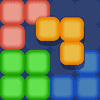
Block Puzzle, at first glance, is a lesson in minimalism. The 8x8 or 10x10 grid you are provided is pristine, bare, a blank slate of potential. Underneath this grid, there is a queue of three colorful blocks, each containing its own geometric shapes ready to receive your command. The objective is deceptively simple: move these blocks around the grid to create full horizontal or vertical lines. When a line is complete, it disappears in a satisfying visual burst, freeing up valuable space on your board as well as adding to your score. The game ends not with a bang, but with a quiet gridlock, when the queue has a set of blocks that can no longer be legally placed on the board. No timers, no enemies, no sudden death. Your only enemy is your spatial anticipation, your patience, and the randomness of blocks that will come. However, mistaking this simplicity for a lack of depth would be to miss the profound strategic, psychological, and even meditative richness that Block Puzzle offers. This guide is your complete companion to the grid, to help you understand not just the rules and strategies, but the deeper philosophy, the cognitive benefits, and the quiet, focused art of placing one perfect block after another.
The Philosophy of the Blank Grid: A Way of Thinking for Mastery
The master Block Puzzle player is in a certain state of mind before placing one single block. They do not approach the grid in a spirit of frantic conquest or hurried completion. Instead they see it as a practice, a ritual, a quiet conversation between their strategic intentions and the random offerings of the game. This is the first rule, basic, unarguable: Block Puzzle is not a game you win. There's no final level, no final boss, no credits sequence to celebrate your win. There is only the time, the beauty, the score of your present running. The moment you play the game anxious and greedy or rushing and impatient, you have already doomed yourself to an early and frustrating loss.
The empty grid is not an enemy to be vanquished, but a garden to be cultivated. Imagine a small, square patch of earth. Your blocks are the seeds, or perhaps the carefully chosen rocks of a zen garden. Your job is not just to fill the space. It's to arrange it in harmony, to create clean lines, balanced open areas, and a structure that breathes possibility. The beginner stares at the empty grid and instinctively starts placing blocks in the middle, anxious to get something, anything, happening. This haphazard approach soon results in a chaotic fragmented board full of isolated holes that cannot be filled. To the master player the empty grid is a sacred, open space. They know that the most valuable resource in the game is not points, but connected, empty territory. They begin their placement with a deliberate architectural intent, almost always from a corner, using the grid not as a dumping ground for unwanted shapes, but as the basis for a structure that must last as long as possible. This philosophical shift from an aggressive filler to a patient, space-cultivating architect is the invisible bedrock on which all other strategies and high scores are built. The point is not to clear lines, but to maintain a beautiful, functional, resilient pattern of emptiness for as long as you possibly can.
Building from the Corners Out: The Architecture of Endurance
If an empty grid is a garden, then your building strategy is the architectural blueprint that determines whether it thrives or gets choked by weeds. Building from the corners outwards is the most important tactical principle in Block Puzzle, the golden rule that separates the player who lives for minutes from the one who lives for hours. The natural human tendency is to place pieces in the middle of an open space. It feels safer, like claiming a patch of land in the middle of a territory. But the center is a strategic trap of the first magnitude. A piece in the middle of the grid gives a jagged, irregular edge in each of the four directions at the same time. It produces a set of candidate sites for future “orphaned squares” – the individual, isolated and empty cells that are completely surrounded by placed blocks. These are the gravestones of a Block Puzzle run. The silent markers of strategic failure. They need the rarest of all pieces, the 1x1 square, to save them.
But a piece tucked neatly in a corner is a masterpiece of efficiency. It takes in the grid’s edge, a natural and permanent boundary, as part of its own. It only adds one or two new edges pointing into the open board, massively lowering the risk of creating isolated squares. Your goal, especially in the all-important early rounds that determine the outcome of the game, is to build a large, solid, connected mass of blocks that grows slowly from a single corner. Imagine you are a bricklayer laying the foundation for a solid patio. You start at the bottom left and work your way out and up with painstaking care, keeping a smooth, clean, unbroken front. This method has two important, related purposes. Firstly, it almost entirely removes the creation of random isolated orphan squares. If you have a solid mass that is growing , it has one edge that is continuous and predictable facing into the void . And no secret pockets left behind. Second, and perhaps even more important, it creates a long, smooth, and incredibly flexible “coastline” against which a vast variety of block shapes can be neatly and efficiently placed. An L-shaped block sits nicely up against a straight edge. A T-shaped block can fit snugly into a notch. Keeping the frontier clean and expanding ensures that the vast majority of blocks the game throws your way have a logical, safe, and space-efficient home. Scatter pieces in the middle, and your board quickly becomes a hostile, jagged coastline of single notches and awkward protrusions, where only the exact, specific block that fits that exact notch will work, a statistical recipe for quick and unavoidable gridlock.
The Sacred Skill of Void Handling
The holy art of void management is closely tied to the corner-building strategy. It's geometrically impossible to avoid empty spaces altogether when placing blocks. The strategic imperative, therefore, is not to eliminate voids but to manage their quality. The number of empty squares you have is not what determines the health of your board, it is the usability and connectivity of those empty squares. A board with a single clean, open 3x3 square is in a state of glorious, radiant health. Any bulky item or one with an odd shape will find a place there. A dying board is a landscape of despair with ten isolated, single-square holes scattered across it that needs ten separate, miraculously appearing 1x1 blocks to be saved. You have to critically look at every placement choice you make through this lens. When you hover a tricky piece, like a Z-shape or a large corner block, over the board, ask yourself one important question: "Will this placement break up my large, beautiful, open reservoir into several smaller, less useful, and potentially isolated voids?" If the answer is yes, then you need to have the discipline to look for another placement, even if it means temporarily breaking up a satisfying pattern you were building, or delaying a potential line clear by a few turns. A large, interconnected void is a reservoir of pure, glimmering potentiality, a promise of future placements. An orphaned square is a closed door, a constant nagging liability. As a defender, your number one goal is to defend your run. You want to protect your big, open spaces. And you want to do it fiercely, and without question.
The Choreography of The Queue: Foresight and the Soft Grip
That queue of three upcoming blocks at the bottom of the screen is much more than a simple preview. It is your intelligence briefing, your strategy, your precious little window into the near future. Playing Block Puzzle without actively scanning and planning around the queue is like trying to navigate a winding mountain road while staring fixedly at the hood of your car. The queue is the puzzle within the puzzle, the layer of complexity that elevates the game from a reactive “where does this block go?” to a proactive, choreographed sequence of interlocking spatial decisions.
The most immediate and obvious use of queue awareness is the “setup play.” Your current block may have two or three perfectly decent placement options on the board . A beginner player just looks at the block in their hand and picks the spot that seems the most esthetically pleasing or the most immediately obvious. The master player will look at the next block coming up in the queue and decide depending on what is coming up next. They choose the location for the block currently being placed that most effectively makes the most perfect, welcoming, and ready-made home for the next block in the sequence. Say, for example, you have a 2x2 square in your hand, and the next block in the queue is a straight line of 3x1. The master player does not just tuck the square neatly away in a corner, but puts it so that it deliberately leaves a perfect straight 1x3 trench right beside it. The next turn, the straight line slides into that trench with a deep satisfying, almost musical click. Two moves as one, a flowing, pre-ordained, elegant gesture. This is the basic syntax of advanced play in Block Puzzle. You’re not dropping individual blocks in isolation any more, you’re writing little coherent flowing sentences of spatial arrangement
The second, more subtle and sophisticated use of queue mastery is the critical art of the “soft hold.” Inevitably, in every long run the queue will give you a set of blocks that are all, in some meaningful way, terrible for the current state of your carefully curated board. A big, clunky cross-shape. A jagged staircase piece that doesn't match anything on your board. A pair of blocks that both need the same exact type of niche that your board just doesn't have. There is no “skip” button, no way to throw away a block without placing it. The unskilled player, confronting this crisis, panics. They stick the least terrible of the three blocks onto the board, jamming it into a space where it does not belong, wrecking their carefully maintained reservoir, causing a cascade of orphaned squares, and initiating a rapid, spiraling descent into gridlock. But the soft hold is used by the master player. They calmly identify the least permanently damaging of the 3 blocks in the queue, and make a conscious, calculated, strategic decision to sacrifice a small, controlled amount of board integrity so that they can buy a single, precious turn of time. They might put a little friendly domino in a slightly awkward place that makes a minor temporary flaw, just to get the queue moving and get the other two blocks into their hand. Often, this small delay of a single turn is all that is needed. It simply alters the board geometry or reveals a newly spawned block in the third queue slot enough to make one of the previously-dreaded shapes manageable, even welcome. It is not a panic retreat, it is a tactical masterstroke, a conscious acceptance of a minuscule imperfection to avert a catastrophic run-ending crisis. It’s the signature wisdom of a player who knows, deep in their bones, that Block Puzzle is a game of endurance, and that long-term survival depends on graceful, intelligent damage control as much as it does on brilliant, flawless building.
The Obvious Paradox: Gardening for Sustainability vs. Harvesting for Greed
The graphics and sound are top notch as you play your strategy. The main way to earn rewards in the game is by clearing a whole line. You'll see a whole row or column disappear with a satisfying sparkle and a pleasant chime, freeing up precious space and adding a gratifying sum to your score. It is the main objective. And yet, in a beautiful and profound paradox at the very heart of mastery of Block Puzzle, clearing lines is so often the direct and immediate cause of a player’s ultimate downfall. This is the siren song of the “greedy clear”. The noob player sees a potential double or even triple line clear shimmering on the horizon, and they become obsessed. They twist their board, leave pieces in crazy, precarious and unstable positions, cutting jagged, irregular scars into their carefully built foundation, all for the glorious, momentary, high-scoring blast of a multi-line clear. They get their blast and for a split second they feel brilliant. But the board they leave behind is a geometrically inhospitable wasteland, a scarred battlefield of orphaned squares and impossible angles and their run, which could have gone on for many more minutes, ends in shambles shortly thereafter.
The master player knows, with a quiet and disciplined wisdom, that a line clear is not merely a goal to be achieved at all costs. It is a tool, a powerful and versatile board-management instrument, and its real value is not measured by the immediate point explosion it provides, but by the quality and sustainability of the board geometry it leaves behind. “Sustainable clear” is the disciplined, long-term alternative to the greedy burst. What makes a clear sustainable ? One that improves or at least maintains the fundamental structural health of your grid . Too often the best clear is not the flashy, multi-line spectacle, but the quiet, humble, single-line clear that runs perfectly along the edge of your solid mass of blocks, and in doing so, resets a bumpy, irregular, and increasingly awkward coastline back into a perfectly straight, clean, and infinitely more useful edge. This is not a simple clear; it is a strategic reset, a deliberate act of geometric renewal, a pruning of the tree to encourage healthier and more vigorous future growth, rather than a reckless hacking off of a major limb for a short-term and ultimately destructive burst of firewood. The delayed clear can be used strategically in a more sophisticated way. You could have a line that is completely charged and ready to be triggered. But you also have a tricky, awkward S-shaped block in your hand that would, as it happens, fit perfectly against that very line, and the next piece in the queue is a simple, innocent 1x1 that could trigger the clear on the very next turn. The master play is to intentionally not clear the line. You use the “ready to clear” line as a temporary, disposable but perfectly shaped scaffold for the awkward S-shape, snugly and securely up against the full row. On your next turn you place the tiny 1x1 block, which triggers the clear, deleting the line and the awkward block you just placed along with it in one seamless, elegant motion. You’ve effectively turned a hard, unwanted block into thin air by weaving it into the fabric of a line you were going to erase anyway. This is the highest and most subtle expression of Block Puzzle mastery, to view your board not as a static, frozen picture, but as a dynamic, flowing and interconnected system unfolding over time. The line clear is not a triumphant sequence ender; it is a flexible, powerful, and reusable tactical tool in an ongoing, beautiful symphony of spatial management.
The Mindful Grid: Psychology, Patience, and the Practice of Meditation
In its quiet, unassuming, endlessly patient way, Block Puzzle is a profound psychological instrument. It is a mirror, burnished, reflecting your own inner mental state with startling and sometimes uncomfortable accuracy. Are you anxious, scattered, overwhelmed by the day’s happenings? Soon, your board will be a chaotic, fractured mess of isolated squares and desperate, failed placements. And it will be merciless. Are you patient, calm, grounded and focused? Your board will blossom with the elegant, systematic, hypnotic beauty of a geometric tapestry, every block falling naturally and harmoniously into place. The game has no timer by design, a deliberate and necessary choice, one that is utterly intrinsic to its identity, to its quiet power. It invites you to breathe, to pause, to deliberate, to think, without pressure or judgment. The moment you start rushing, the moment you place a block simply to ‘get it out of the way’ because you are impatient or frustrated, is the moment you start losing, not only the game, but the meditative thread of the experience itself.
The most common and insidious psychological trap a player will encounter is frustration, known in gaming parlance as “tilt.” You’ve been on a beautiful, harmonious, deeply satisfying session. Your board is an abstract artwork. And then, just when you think it’s safe, the queue throws up a load of absolute nightmare blocks, shapes that look almost maliciously designed to wreck your specific layout. Statistical cruelty puts you in a soft hold and leaves a small but annoying flaw in your perfect structure. Then another bad block comes along, and the flaw grows, a little crack across a clean vase. A simmering, internal frustration, a pressure cooker of spatial anxiety builds quietly. You begin placing blocks faster, sloppier, an internal voice whispering urgently, “just get through this, just get to a good block, and I can fix it.” This is the death spiral, the runaway feedback loop. The frustrated brain makes quick, bad choices, which create more and bigger flaws, which in turn intensifies the frustration and quickens the reckless speed. The antidote to this poison is so simple, so available, and yet so difficult to remember in the heat of the moment: the pause. In Block Puzzle you are blessed with the endless gift of time. When you feel that hot, familiar flush of frustration rushing in your chest, your hands should immediately and gently leave the screen, the mouse, the keyboard. Lean back in your chair. Take one slow, purposeful, cleansing breath. Look at your board not with the emotional sting of frustration and self-criticism, but with the detached, curious, analytical and compassionate eye of a puzzle solver looking at an interesting problem. The pause is not a waste of valuable game time; it is, simply, the most powerful and effective move in the whole game.
It is here that Block Puzzle transcends the realm of entertainment and becomes a true, accessible and deeply rewarding wellness practice, a form of active meditation for the modern mind. In a world of constant, aggressive, fragmenting stimulation, the game offers a bounded, safe, beautifully designed space for deep, unbroken, restorative focus. The simple, repetitive, tactile act of dragging colorful blocks, the clean and satisfying visual feedback of complete lines disappearing, the quiet, absorbing cerebral challenge of ongoing spatial planning—they all combine synergistically to create a deeply calming, almost ritualistic experience. Playing a long, uninterrupted session of Block Puzzle is like the meditative act of raking the gravel in a zen garden or arranging flowers in a vase. You are bringing order out of chaos moment by moment, you are keeping your mind busy in a gentle but completely absorbing task, you are creating a quiet, protected pocket of profound calm in the middle of a noisy and demanding world. [3] The score is simply a number, a gentle and non-judgmental measurement of how focused you are in this moment. The true, enduring payoff is the state of mind you cultivate as you play. A relaxed, attentive, deeply peaceful presence that can subtly and beneficially linger long after you’ve closed the browser tab.
The Eternal Grid: A Journey Without End
Block Puzzle, in its purest and most honest form, is a game without a final destination. You will not subdue it. You won’t make it to the final level and watch the credits roll in victory. There will always be another run, another new empty grid, another unique and unpredictable sequence of shapes ready to meet your choices. This is not a design flaw or a failure of ambition. It is the deepest truth of the game. And its most enduring and generous gift. The puzzle is forever and your relationship to it is a never ending, ever changing, ever rewarding personal journey. Your high score is not a trophy to mount on a wall. It is a diary, a living record of your improving spatial intelligence, your deepening strategic wisdom, and your growing capacity for calm, patient, focused attention. An afternoon of stress, confusion, and distraction might result in a short game, the score reflecting the internal climate. A peaceful, quiet, centered morning may allow a session to flow easily for an hour, the score reflecting the quiet you have created.
So your journey to mastery is not a mountain to be climbed but a daily gentle practice to be embraced. It’s the quiet ritual of unlocking the grid, breathing in to refocus and begin again, new and without judgment. Over time you will acquire a deep and almost physical intuition for the weight and personality of each block, for the way an L-shape feels fundamentally different from a square in your strategic calculations. On the still half-empty board, you will begin to see the faint ghosts of future clear lines shimmering with possibility. You will create a personal, signature style, a unique way of building your foundational corner, a distinct and recognizable vocabulary of spatial patterns that you will return to again and again. And you will learn, slowly, gently, with abundant self-compassion, how to be kind to yourself when a beautiful, long and beloved run inevitably falls apart. A game over screen is not a personal failing, or a statement about your intelligence. It is merely the natural, elegant, and mathematically inevitable conclusion to a particular, beautiful, unique, and utterly unrepeatable arrangement of blocks. A click clears the grid and you start over. Right away. New possibilities, a mind a bit sharper, a spirit a bit calmer, a heart a bit more patient than before.
So come to the grid. Do not be afraid of the huge, empty space; but rather welcome it with joy as a canvas of infinite possibility. Do not curse the difficult, awkward, apparently impossible blocks, welcome them with curiosity as challenging but benevolent teachers. Don’t desperately chase the high score with white-knuckled greed; let it be a gentle, organic marker of your journey, a quiet companion along the way. The blocks wait for you, colorful, patient, and full of promise. What exquisite, elaborate, transitory mosaic will you compose in your own private square of silence today? Always new, always a delightful surprise, and always at its unshakable core, a quiet, luminous reflection of your own focused, creative, peaceful mind.
Embed this game