















 Loading...

There is magic, undeniable magic, in the simple. In a world of video games filled with hyper-realistic graphics, convoluted narratives and control systems that require the dexterity of an octopus, a silent revolution is always in the making. The revolution makes no sound. No explosions, no cinematic cut scenes … Instead it hums with the soft, satisfying click of a puzzle piece clicking snug. It’s the soft, absorbed hum of a mind absolutely immersed in something that is at once staggeringly simple and endlessly complex. This silent revolution is centered around a genre that has captivated millions and one game that exemplifies its principles: BlockMatch.
BlockMatch is not just a game, it’s a canvas for cognitive art, available on platforms like GamePix. It’s a mental gymnasium in disguise a colorful grid. You've probably seen one of these kinds before, or maybe you're a veteran of block-placing puzzle games. But BlockMatch, in its purest form, removes the noise and gives you an experience that is as soothing as it is stimulating. This article is not a review or a set of instructions. It’s an in-depth look at the philosophy, the strategy, the cognitive benefits and the sheer, meditative joy of playing BlockMatch. Whether you're a newcomer taking your first look at the 10x10 grid, or a high-score chaser looking to hone your technique, this guide is designed to help you master the art of the grid.
Decoding the Canvas: The Core Mechanics of BlockMatch
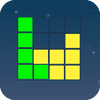
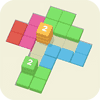
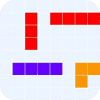
If we are to speak of mastery, we must first learn the basic language of the game. The premise of BlockMatch is elegantly simple, a masterclass in minimalist design. You are provided with a clean, empty 10x10 grid. There is a line of three random blocks below the large open area. These are not the typical, predictable tetrominoes you may be familiar with from other games. The blocks in BlockMatch are a diverse set of geometric shapes, from simple dominoes of two squares, to complex, jagged shapes spanning five squares in an irregular pattern. Your job is pretty simple, drop these blocks into the grid and make complete horizontal or vertical lines. When a line is completed it disappears in a puff of pixelated satisfaction, giving you some much needed room on your board. The game ends not on a timer but on gridlock—the point at which the queue shows a set of blocks that can no longer be legally placed on the grid.
This is the base loop; Place blocks, clear lines, make space, repeat. But there’s a universe of strategic depth inside this simple loop. The first and foremost lesson for any new player is to change the way you think. The enemy is not a clock, but your own short-sightedness. The game is graceful in that there is no time limit, a conscious decision made by the designers to encourage more considered play. BlockMatch is a dialog between you and the ever-changing shape of the board at each session. The real challenge is spatial reasoning, the ability to look at a chaotic half-filled grid, and not just see what is, but what might be.
The pieces themselves are the vocabulary of this talk. Soon you will learn to classify them. There are the friendly, very useful 1x2 and 2x1 dominoes and the 3x1 straight lines – the unsung heroes that can fit into narrow gaps and often provide the final square needed for a clear. The classic 2x2 and 3x3 squares are wonderfully space-efficient, but can also lead to awkward hard-to-fill geometrical dead-ends if placed without foresight. Then there are the tricksters: the L-shapes and the T-shapes and the bigger, more unwieldy shapes that look like a stair case or a corner. These pieces deserve respect. They are the cause of your biggest clear-combos and most frustrating grid-locking moments. The first step to true fluency in BlockMatch is to see these pieces not as individual shapes, but potential parts of a future line.
The Strategic Foundation Building from the Corners
For any BlockMatch player, the best piece of advice – the golden rule that separates the casual dabbler from the dedicated strategist – is to build from the corners out. A new player will naturally want to start by slapping blocks into the middle of the grid. It feels right, like staking a claim on the empty space. But this is a strategic trap that leads to swift and frustrating defeat. Putting pieces in the middle makes the board look scattered and broken up. You'll end up with a patchwork of single empty squares, solitary gaps that are a nightmare to fill in. And then the game quickly degenerates into a mad dash to find that one specific 1x1 square that never seems to exist, and your queue gets clogged with big, glorious shapes that you have nowhere to put.
To master something you need to think "architecturally". You’re not just dropping blocks in, you’re laying a foundation. Corners of the 10x10 grid are your most valuable real estate. Why? That’s because a corner provides you two natural boundaries. A block that fits snugly in a corner will automatically align with the side and the top or bottom and will not result in awkward single squares sticking out. The best way to play is to form long, solid lines along one or two sides of the grid. Say you’re a bricklayer. Begin at the bottom left corner and develop a solid 5×5 or 6×6 square block of territory. As you build this foundation you are intentionally creating clean straight edges that face the rest of the empty board. This turns your placed blocks from a random pile into a coherent, growing structure.
This approach does more than keep things tidy; it creates opportunities. A clean edge is essentially creating a long, continuous and flexible surface to nestle L-shapes, T-shapes and straight lines against. A ragged, sloppy board has only sharp, single-square notches. The edge is clean, growing, a smooth coastline. You can place a lot of pieces right up against your structure and slowly and methodically push your territory across the board without leaving isolated holes. This turns the game from reactive plugging of holes into a proactive constructive process. You’re no longer a repairman trying to prevent leaks from forming, you’re a master builder, laying down the foundations for a skyscraper that can withstand whatever storm the random block queue throws your way.
The Art of Managing the Void: How to Make Empty Space Useful
The basic offensive strategy is to build from the corners, but the key defensive skill is managing your voids. A void is an empty square that is left when you place your blocks. The trick is to control the quality of these voids, not just the number. Ten single, isolated empty squares on the board are a much more dangerous state than a single, large 2x3 rectangular void. The latter is a graveyard of opportunities that need ten separate 1x1 pieces to be saved, and these pieces are rare and always seem to be a wasted turn. The latter is a potential pool easily filled by a straight piece, an L-shape or the perfect 2x2 or 3x3 square.
The most destructive void is the “orphaned square”, which is a single empty cell surrounded on all four sides by placed blocks. These are created by careless placement, especially placing a T or L into a position that wraps around a single empty square, sealing its fate. Every placement you make should be pre-screened with one question: "Does this placement create an unfillable orphaned square?" If the answer is yes, you must try to find an alternative placement, even if that means breaking the satisfying pattern you were building or discarding a large clear you were hoping to set up later. The right play in the long run is almost always to give something good up today rather than suffer a permanent blemish.
Your goal should be to create “positive voids” — connected, spacious empty areas that mimic the shapes of the pieces you have. Ideally you want to leave a big open rectangular or L-shaped basin for future pieces to flow into. Every line cleared isn't just the blocks vanishing, it's you carving out this basin. Think of your placed blocks as the sides of a reservoir, not a solid mass. Your job is to form these banks so they hold the water (your future pieces) cleanly, without forming stagnant, disconnected little puddles (orphaned squares). A master BlockMatch player sees the reservoir in a half-full board and immediately spots it, and every move is designed either to gently expand it or eventually fill it in one satisfying, clean sweep.
Dancing with the Queue A Choreography of Prediction
In BlockMatch the battle isn’t just on the grid, it’s in the queue. The 3-block queue is a glimpse of the near future and knowing how to utilize that information is what separates a good player from a great one. To play without checking the queue is like driving a car only looking at the hood ornament. Eventually you will hit a gridlock. The queue is your navigation system, and a capacity to drive with foresight.
Just look at it before you place your current piece, the first step to queue mastery. Your first instinct may be to place the block you are holding in the best possible place. A more sophisticated approach is to find a location that is good for this block, but also sets the table nicely for the next piece in the queue. Let’s say your current block is a 2x2 square and the next piece is a straight line of 3 blocks. Instead of just throwing the square in a corner, a master player might deliberately place it such that there is a perfect 1x3 trench right next to the square, knowing that the straight line can fit right in on the next turn. This is two moves into one fluid, pre-meditated sequence.
The second, and more difficult, level is the “soft hold” art. Often you will find yourself faced with a piece in the queue that is an absolute disaster for the current state of your board. It is the wrong shape, it is too big and setting it down will crush your carefully constructed reservoir into a million orphaned squares. But you can't 'skip' it in the traditional sense. The soft hold is the strategic choice to make a sub-optimal placement with one of the other pieces in the queue, specifically to buy you one more turn. You could put a small domino down imperfectly. Or even create a small temporary imperfection just to get the queue moving and get that dreaded piece in your hand. Then, when you've got it out, you can put it in a spot that's a little less damaging than you would have had to use before, or sometimes, the single turn has shifted the board enough to make it surprisingly useful. The “sacrificing a small bit of board perfection to manage a queue crisis” dance is the hallmark of a BlockMatch expert. That the queue is not a conveyor belt of isolated challenges, but a river. Sometimes you must paddle with the current to avoid a rock, even if it means drifting a bit from your ideal course.
The Paradox of Clarity: Burst vs. Sustainability
BlockMatch has at its heart a deep and almost philosophical paradox: what you want to do, clear lines, can also be the very thing that causes you to lose. That’s the burst clear Siren call. You see a nice setup that allows you to clear 2 or 3 lines at once, an act of spatial dexterity that results in a glorious cascade of disappearing blocks and a huge bonus to your score. The temptation is strong. But in their wake these large scale clears often leave you with a complex jagged geometry. You may clear a double line, only to find that you have carved a jagged scar across your board, leaving a landscape of peninsulas, deep narrow inlets and, of course, the dreaded orphaned squares.
The master player understands that the long game is the game of sustainability, not flash-bursts. A sustainable clear is one that removes lines and actually improves the overall geometry of the board or maintains its structural integrity. Sometimes a single clean line cleared from an edge is worth more than a chaotic triple line clear that destroys your nice base, making a bumpy surface a perfectly straight edge again. The sustainable clear returns the board to a cleaner, simpler state. It’s like pruning a bonsai tree – you don’t just chop off a big branch and hope for the best. You make a small, precise cut that encourages healthy growth.
This philosophy also determines when to cull. A tempting button is a full line, ready to pop. But is it strategic to clear now? Suppose you have a line ready to be cleared , but the next block you need to place is a tricky L shape that fits perfectly against that line . The next piece in queue is a 1x1 domino that could easily trigger the clear . The sustainable play is to hold the clear, set the L-shape and then on the next turn trigger the clear with the domino. You’ve just used the promise of a clear future as a scaffold for difficult work. This is the ultimate expression of seeing your board as not a static picture, but a dynamic, flowing system over time. The line clear is not a mere goal, but a tool to be deployed strategically.
The Psychological Gymnasium: Play’s Deeper Benefits
Describing BlockMatch as a puzzle is to completely miss the point. The true magic of the game takes place in the mind of the player. It is a deeply cognitive and emotional experience, a silent interactive form of meditation for the information age. In a world where our attention is constantly being shattered by a thousand notifications, BlockMatch demands and rewards deep, uninterrupted focus. This is the state that state psychologist Mihaly Csikszentmihalyi famously called 'flow'. Flow is a state of complete absorption in an activity where time seems to melt away, self-consciousness falls away and the activity itself becomes intrinsically rewarding.
The design of the game is a perfect engine for flow. The goals are explicit, the feedback is real-time and unequivocal, and the challenge is in that fine line between anxiety (a too difficult, messy board) and boredom (a too easy, empty board). As you play, your brain’s prefrontal cortex — the seat of high-level planning and spatial reasoning — is firing at full capacity. You're doing an ongoing mental simulation: What if I put the L-block here, then there's a 2x2 space, but am I sure a 2x2 block is coming? It's an exercise in your working memory and your prospective planning. Study after study has shown that this kind of regular mental exercise can build up what’s called a “cognitive reserve,” possibly making the brain more resistant to the effects of aging.
But there's a deep emotional benefit, as well, beyond the neurological ones. BlockMatch is a rarity in our chaotic world: a controlled environment of consequence. Every piece you put down is a choice with an immediate, visible consequence. The board does not judge, it just is. You don't get a reprimand when you do something wrong, you get the quiet, undeniable reality of a newly formed orphaned square. And a success is not met with a fanfare, but with the silent deeply satisfying evaporation of a line that has been perfectly completed. This is how the game becomes ritual. The repetitive motor action of dragging and dropping blocks is calming. Making order out of chaos, transforming a blank scary grid into a structured meaningful landscape is a microcosm of one of humanity’s most basic drives. When the world outside seems chaotic, a BlockMatch session is a small, private act of creation, where you are the sole author of the order that emerges.
A Practical Roadmap to Mastery
A helpful guide needs a practical path, though understanding the philosophy is important. If you’re ready to change your game, here’s a road map to follow.
Your goal isn't to get a high score, it's to learn the language. Switch off the competitive part of your brain. Start every game with a ritual - tightly put the first piece, whatever it is, into a corner. Then use your next few pieces to build a solid, clean mass out of that corner. Disregard the score for the initial ten sessions. Your only objective is to survive as long as possible without creating a single orphaned square. You may clear lines, but only when the clear leaves a perfect clean straight edge. This phase will feel confining, but it’s building the muscle memory and spatial discipline that will become instinctual.
And now, turn your attention to the reservoir. As your foundation grows, try to keep the remaining empty space on the board in a large neat rectangle or L shape. Keep a close eye on the queue. Before you place a piece say out loud “I am placing this [L-shape] here because it sets up a perfect spot for the [straight line] coming next.” You will fail often but now you are making active conscious decisions based on future information. This is also the time to practice the “soft hold” with determination. When the queue is a crisis, don’t just despair. Find the least-damaging piece to sacrifice to delay the inevitable.
Here, in the last stage, the rules become automatic and you can begin to consciously bend them. You learn when a ragged double-clear is worth the clean-up strategically. You begin to see “flow patterns,” repeating geometric sequences that you can solve almost subconsciously. The game is no longer a succession of separate problems, but a flowing, continuous dance. You can play without any internal monolog, with your hands moving the blocks into place from pure intuition. When defeat comes, it doesn’t feel like a failure, but the natural, graceful ending of a beautiful, complicated piece of art. You don’t begin anew with frustration, but with a calm breath, eager to see what new, unpredictable, beautiful pattern will emerge on the fresh, empty canvas of the 10x10 grid.
In the end the grid on GamePix is more than a game. It teaches patience, builds foresight and is a quiet sanctuary for a focused mind. To fit shapes together, to create order from a stream of random pieces, is a deeply human and deeply satisfying thing to do. So, start the game, breathe deeply, and look at the grid not as a challenge to be met, but as a landscape to be carefully, artfully molded. The blocks await you. What are you going to build today?
Embed this game