



















 Loading...

There’s something childlike and magical in the intersection of two timeless play patterns: building with blocks, and commanding toy soldiers. For generations, the child’s room has been a sprawling battlefield of plastic army men defending their pillow fortresses and wooden block ramparts. This primitive, imaginative form of play is written into our collective consciousness. It's a story of creativity and strategy, and the simple yet profound joy of creating a world and then fighting to save it. This much-loved blend of creation and combat comes to its purest and most addictive form in this digital age, in a game that combines the blocky esthetic of a crafting sandbox with the heavy, tactical tension of a third-person shooter. Blocks Army Craft is a free-to-play adventure on GamePix that has much more going for it than its charming, voxel-based visuals would lead you to believe.
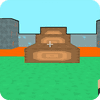
Blocks Army Craft looks as though you have stepped into a toy box come alive. The world is a busy tableau of cubes. The entire thing – the trees, the hills, the bunkers and the soldiers themselves – is made of a recognizable, chunky geometry. You’re dropped into this universe not as a passive spectator but as an active participant, a soldier-crafter that must build cover, craft weapons, and battle pixelated adversaries over a variety of sprawling maps. But to see it as nothing more than a pastiche of popular block-building and military games is to miss the point entirely. Blocks Army Craft is another beast. It is a unique synthesis requiring mastery of two minds. You are more than a fighter. You are more than a builder. You are an architect of your own survival, a battlefield engineer who has to think with a trowel in one hand and a rifle in the other. This guide is your complete field manual, designed to turn you from a baffled recruit into a legendary commander who can change the battle terrain to your liking. We'll discuss the fundamentals of movement and combat, the high-level strategy of building on the fly, the tools available to you and the mental discipline required to keep cool and creative under the intense pressure of voxel-based warfare.
The Voxel Battleground: Deciphering the Game's Dual Nature
The most important lesson for any new player of Blocks Army Craft is to understand and accept the game’s dual identity. This is not a traditional shooter where the map is a static, unchangeable arena built by a level artist. This is a world in which all is destructible and constructable. Every tree can be cut down. All hills can be tunneled through. Every wall that looks solid can be broken down, one block at a time. And vise versa, the place where you stand may be the base for a new building. A flat open field that is a death trap for a soldier on the run can be transformed in seconds into a fortified bunker with firing slits and a protective roof. The key to unlocking the strategic depths of this dual identity; the game is a combat sim and a creative sandbox at once.
The rookie player plays Blocks Army Craft as a true shooter. They run on the open ground and rely on their strafing and aiming skills to win gunfights. Sometimes they get it right, other times they die over and over again in situations where a well-placed block would have saved them. They are playing half the game. The master player has assimilated the building mechanic so much that it is part of their combat loop. It’s not “I see an enemy. I will shoot.” It’s “I see an enemy. Where is my closest cover? There is no cover. I will instantly make cover. I will build a wall three blocks high, step to the side of it, and use it as a firing position.” That shift from a reactive, two-dimensional fight to a proactive, three-dimensional, creative fight is the journey every player must make. You don’t exist in the battlefield, you define the battlefield. Blocks aren't just a cute esthetic choice. They're your number one tactical weapon, as good as any gun.
Same goes for movement and positioning. The average shooter player will seek natural pathways, valleys, and pre-built structures to move through. For a Blocks Army Craft player a sheer cliff is not an impassable barrier but a staircase to build. They identify an enemy camped in an apparently impregnable tower and immediately set about calculating structural weak points, or else start tunneling underneath the base of the tower to collapse it from below. The environment is not a painting. It is a puzzle. To every tactical problem a solution is destructive or constructive. Looking for a little high ground? Construct it. Want a flanking route? Mine it. The enemy is behind a wall? Just shoot it through with a high caliber weapon or tear their protection apart with your pickaxe and leave them exposed and panicked. That kind of mental agility, the ability to flip-flop between the “soldier” and “engineer” ways of thinking, is what makes a truly elite player.
The Builder's Arsenal: Learning the Craft of Instant Fortification
If the building mechanic is the soul of the game, then the ability to instantaneously fortify is its most sacred art. Often you will find yourself exposed in the open. The sharp staccato of enemy fire snaps past your blocky head. The natural reaction to panic is to leap and flee. The correct, trained response is to immediately switch to your building tool and do what is known as a “panic fortress.” It’s a quick, instinctual series of block placements that creates immediate, life-saving cover from incoming fire.
The easiest panic fort, and the most important, is the "three-wall booth." Drop two foundation blocks in front of you in less than a second, stack a third on top, then place a single block on either side to guard against flanking fire. You've just created a U-shaped bunker at waist height in the time it takes to load a rifle. This simple structure converts you from a target exposed on a flat plane into a fortified defender. Until it is pure muscle memory, practice this motion. If the game permits it, boot up a blank, private world, or find a secluded corner of a map, and just drill. Go into build mode, plant three blocks, step back, plant three blocks, step back. Your fingers should know this rhythm as well as they know the reload button. In a real firefight, your mental load is solely on the enemy’s position and how many rounds you have left. You have to hand over the job of building your protective shell to your subconscious, where it will be done without a conscious thought.
From this basic panic fortress you can move on to more complex defensive architectures. The crucial next step is the “stairway to advantage.” You are in a gunfight and the enemy is slightly above or even with you. You place a staircase block inside your protective booth. You don't just run up it straight away. That wouldn't be any good. You edit it ( if the game has that option ) , or build it in a way that provides cover as you ascend . You use the height you've gained to peer over your own wall, and fire on the enemy from an unexpected angle. The high ground is the decisive advantage in any combat, as it always has been, and in Blocks Army Craft you can literally manufacture the high ground on demand. The player who only uses the terrain provided for them by the map is forever at the mercy of the player who can create their own. A hill is merely a suggestion, your own built tower a statement of dominance.
Tools of the Trade: Picking Your Block-Breaker's Armaments
A master builder with no weapon is just an architect. Your effectiveness in Blocks Army Craft combat is determined by knowing your arsenal and, more importantly, knowing what tool is right for the situation. You typically get a few guns . Assault rifles , pistols , shotguns , sniper rifles , explosive launchers . Each weapon has its own character and its tactical use is often directly related to the block-based environment.
The assault rifle is your workhorse, your jack of all trades. Good out to medium range and tolerant enough to use in a panic. It's the ideal tool for a builder, enabling you to lay down suppressing fire while you swiftly erect a wall. The shotgun, however, reigns supreme in the close-quarters, block-by-block fight. Suppose you have tunneled into an enemy’s fort, or an adversary has jumped right into your panic fort. In these tight voxelated spaces where the engagement distance is in single blocks, the burst damage of the shotgun is unrivaled. It penalizes the overconfident builder who thinks that his walls make him untouchable.
Then there’s the sniper rifle, the weapon of the patient, the observant counter-builder. You’re a sniper, but your job isn’t just getting headshots. To deny space to the enemy to build.” If an opponent stops to build a tower or a ramp, even for a second, they become a stationary target, a blocky statue perfectly silhouetted against the sky. A good sniper is looking for those moments of creative vulnerability and punishing them immediately. “You’re not a sharpshooter, you’re a builder’s predator.” Finally, the rocket launcher or grenade is the great equalizer, the tool of structural demolition. An enemy built a sophisticated multi-storey fortress? A perfect rocket shot kills the player inside, and also deletes their creation. And in one big bang it destroys their tactical advantage and all their hard work. The rock-paper-scissors element that exists between the weapon and the building mechanic is what you need to understand so that you can pick the right tool for the job. This isn’t merely a matter of gun choice, it’s your declaration of what your tactical doctrine is for that life.
The Resourceful Commander: Procurement, Crafting and Economic Warfare
The blocks you put down don’t just materialize out of nowhere. They come from within your own wellspring of resources, a stockpile of materials that you must consciously gather from the world around you. This adds an important economic element to the combat, making Blocks Army Craft a game of resource management under fire. You are not merely a soldier and a builder, but a wartime industrialist, constantly faced with the tension between the immediate need for ammunition and fortifications and the long-term need to assure a steady supply of materials.
The ax and the pickaxe aren't just an afterthought. They are your major economic engines. Every tree you cut down , every rock you quarry , is adding crucial blocks to your inventory . New players frequently err by delaying gathering until they have zero inventory, which leaves them in a firefight with no way to build. The disciplined commander blends movement with gathering. You should be constantly hacking away at nearby trees, peppering rock faces with your pickaxe as you travel from one objective to the next. This is not a distraction from the mission, it is the logistical underpinning upon which the mission can be built. It's the principle of "gathering on the go". You don't want to be in a situation where you have to make a dedicated, vulnerable gathering expedition into a contested area just to get the basic blocks you need for a panic wall.
This resource system also makes economic warfare possible, a kind of strategic sabotage that is often much more devastating than a direct assault. If you can safely flank into the enemy's rear area, find their resource cache, or the environment they have been farming, you can tear it down. They cut down the forest they rely on for wood. Mine the stone deposits around their base. This is a slow insidious form of attack that destroys the enemy team's ability to rebuild after your frontal assaults A complete stock of high-level material in an opponent is a terrifying, ever-renewing bastion. An opponent who has been economically strangled is a desperate, vulnerable soldier with only a pistol and a prayer. The real master of Blocks Army Craft doesn’t think of the map as a series of sightlines and cover, but as resource nodes, logistical supply lines and economic weaknesses. You are fighting a war of material and a war of ammunition.
Tilt—Creativity Under Fire & Growth Mindset Psychological Workshop
A game like Blocks Army Craft has a very specific psychological pressure. In a normal shooter you can take the mechanical loss if you get out-aimed. But in this game you can be out-created. An opponent can beat you not only by shooting faster, but by thinking faster, by building a more cunning, disorienting and structurally brilliant trap than you can conceive. It can be a massive blow to the ego. Getting out-shot is one thing. Being out-smarted in a public, voxel-based architecture duel is another. This is often met with an instinctive feeling of creative inadequacy; a quiet voice saying “I’m not that clever. I can’t build like that”.
The first and most important psychological barrier is to kill this demon of the “creative fixed mindset.” Your ability to create under fire is not a fixed, innate talent. It is a skill, like any skill, that is honed through deliberate practice and more than anything, through glorious, spectacular, repeated failure. Every master builder has a graveyard of towers that have been badly conceived and blown up all at once. Every architectural genius in the game has at some point accidentally walled themselves into a dark wooden tomb in an attempt to escape a firefight and died in panicked self-imposed darkness. They are not failures, they are data points. They are the critical, iterative steps on the path to mastery. You must think like a "laboratory." You don't rage when you die in some humiliatingly creative way. You analyze. You think the scenario over in your head. “What specific block placement would have saved me there? A floor piece to block his angle? A stair rotation to give me a peek-down shot?” You are not a failed soldier; you are a scientist who has just completed a very informative, if fatal, experiment.
This leads to the management of the ultimate creative killer, tilt. Tilt is in a creative shutdown Blocks Army Craft Player tilts and stops building. They go straight up infantry fight, run in straight lines, forget their pickaxe is a thing. So they get so frustrated with a couple of failed constructions that their brain decides to just give up the main mechanic of the game as a coping mechanism. The way out is the “creative reset.” When you sense the tilt coming on, you make a conscious effort to step away. You find a quiet, safe corner of the map, away from the front lines and you just build something. Not a fighting structure but something just for the love of making. A small house. A tiny tower. A pixel-art rendering of a flower. That simple act reconnected you to the playful, creative part of your brain that the competitive frustration had shut off. It reminds you that the blocks are not just tools of war, they are tools of expression. You reconnect with the basic joy of the game, and from that cool, centered, creative space you can reenter the fray with a clear mind and a builder’s spirit. You are here not just to win, you are here to create and winning will be the natural consequence of a mind that is both creatively engaged and psychologically resilient.
The Doctrine of Unified Battlefield: Your Path to Command
To bring all these together—the soldiering, the building, the economics, the psychology—into one coherent path to command, you must assume a new identity. You are not a deathmatch player. You are a field commander in a fully mutable world. Your job isn’t about getting kills. Your job is to control space, manage resources, and sculpt the environment to create unfair advantages for you and your team. Each action is a decision in this larger strategic context.
You get a commander’s view of the battlefield before you fire a single shot. You identify the key terrain features not as they are, but as how they might be. That flat open killing field? It’s a future network of trenches and bunkers. That big hill in the middle? It’s a futuristic compound with 360-degree views.” You instantly start your economic survey, find the closest wood and stone resources, and start your gathering-on-the-go as you head toward your objective. Your first engagement is not a reckless charge; It's a strategic feeler. You see an opponent. You don’t shoot now. You immediately build your panic fortress and dig in. Only from this safe place do you participate. Every next move is a cycle, build, shoot, move, gather, build. You are a storm of creative and destructive energy, constantly shaping the world to your advantage.
When you get your ass kicked, and you will many times, your debrief is immediate and constructive. You don’t blame the opponent’s luck or arms. You ask, "What could I have built to win that? What resource did I not have?" And then, having learned that lesson, you respawn and start again, not with a grudge, but with a new piece of architectural knowledge in your tactical toolkit. And it changes you. Bit by bit. The game is no longer a series of frustrating deaths but a continuous, joyful, infinitely deep learning experience. Your paint is the blocks . Your canvas is the battlefield . Your brush is your weapon . You’re not just a player anymore. You are a master of victory, a maker of legends in a world in which everything from the ground beneath your feet to the sky above your head can be remade by your will. Welcome to the army, Mr. Now go and win your victory.
Embed this game